
From AI manifestos to the new "Spaghetti Big Brother" — here are 5 things our AI Business Engineers are interested in this week!

Signal Worth Noticing
Palantir’s new 22-point manifesto is worth watching because it makes something unusually explicit: some AI companies are no longer content to sell tools quietly into institutions. They want to articulate a full theory of the world around those tools, including national power, military force, civilizational confidence, and the role software should play inside the state. That matters because enterprise technology decisions increasingly carry philosophical freight, whether buyers admit it or not. Once a company begins publishing a worldview alongside its platform, the evaluation criteria change. It becomes a question of what kind of institutional logic a customer is inviting into its stack. Palantir’s manifesto has already triggered sharp criticism in the UK, where lawmakers are questioning whether a company advancing such views should be entrusted with public-sector systems and sensitive data. The larger signal is that AI is moving beyond product competition into legitimacy competition.
Framework We're Using
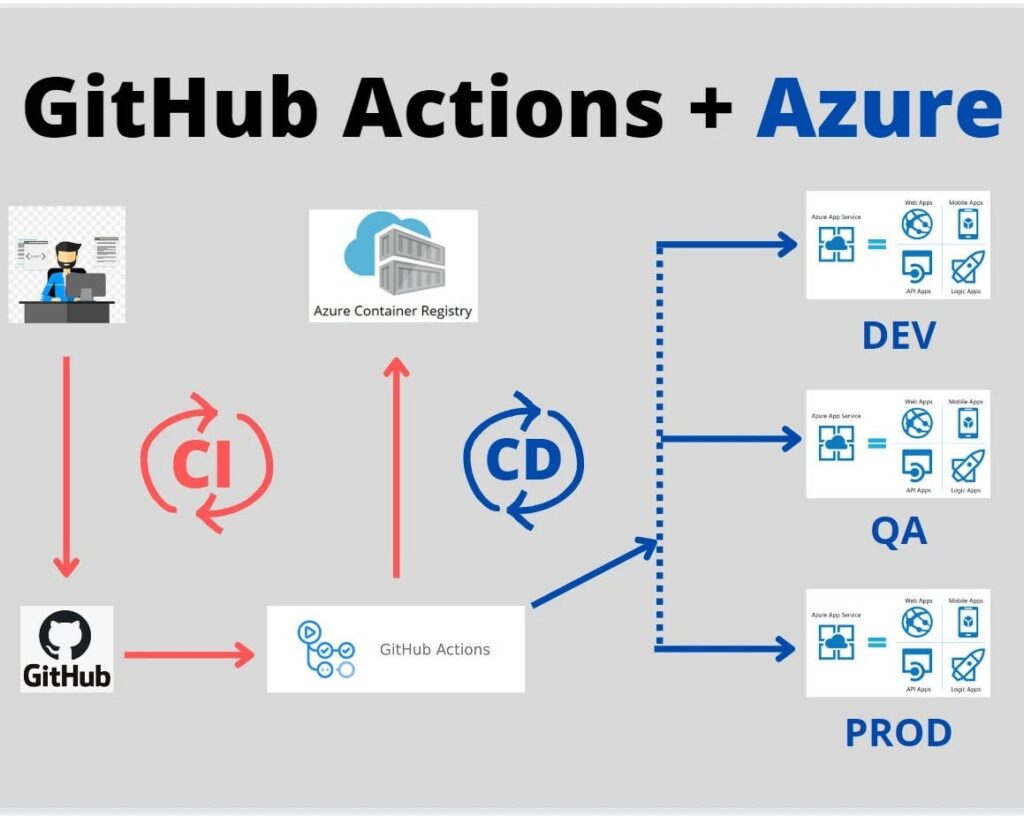
We’re increasingly treating GitHub-based CI/CD less like a pile of repository workflows and more like an organizational product. The goal is to make the safest path the easiest path: reusable workflows, consistent deployment interfaces, environment approvals, OpenID Connect over long-lived secrets, and enterprise policies that limit which actions and reusable workflows teams can use. GitHub’s current roadmap is leaning directly into secure defaults, policy controls, and CI/CD observability, which reinforces the idea that delivery should be governed centrally but consumed locally. In practice, that gives platform teams a paved road to maintain while letting product teams keep speed because they are no longer hand-assembling brittle YAML in every repo. This way, when a new model drops, anyone in our org can go in, edit the .md prompts in src/lib/ and redeploy so AIBES users get the most perfectly tuned solutions with minimal lag!
AIBES Tech of the Week
Claude Design is interesting because it shrinks the distance between a rough idea and a presentable artifact. Anthropic launched it on April 17 as a research-preview Labs product for creating designs, prototypes, slides, one-pagers, and more, powered by Claude Opus 4.7. The bigger lesson is that model quality becomes most useful when the surrounding loop is structured well. Give the model visual context, explicit constraints, and a tight review cycle, and it starts acting more like a fast first-pass design partner. That makes it especially useful for internal interfaces, stakeholder visuals, and early product explorations where speed-to-clarity matters more than polish on draft one. As a small startup, we notice that "speed kills deals" so we are constantly experimenting with new tools to amplify our workforce -- and then we get to teach our clients how best to use them, too! AI proficiency spreads through your org just like any other systems-based knowledge and AIBES helps your company stay up to speed.
Trending News
- Pasta sauce company Prego is partnering with StoryCorps to launch the “Connection Keeper,” a limited-run tabletop device designed to record dinner conversations for posterity...
- China’s streaming giant iQIYI says it wants most new film and TV output to be AI-generated and hopes to release a commercially successful AI movie as early as this summer.
- Amazon is investing another $5 billion in Anthropic, bringing its total commitment to $13 billion so far, while Anthropic commits to spend more than $100 billion on AWS over the next decade.
- Amazon’s Prime Air drone delivereis are taking heat after videos and reports showed fragile packages being dropped from roughly 10 feet up!
- Tim Cook will step down as Apple CEO on September 1, with hardware chief John Ternus taking over as the company enters a period of heavier AI pressure and higher strategic expectations.


Quote We're Pondering:
“Efficiency is doing things right; effectiveness is doing the right things.”
- Peter Drucker —Austrian-born American educator, author, and consultant, widely regarded as the "father of modern management