AIBES 5-Point Friday #1
From new fine-tuned models to OpenAI's first major cloud deal - here are 5 things our AI Business Engineers are excited about this week!
Signal Worth Noticing
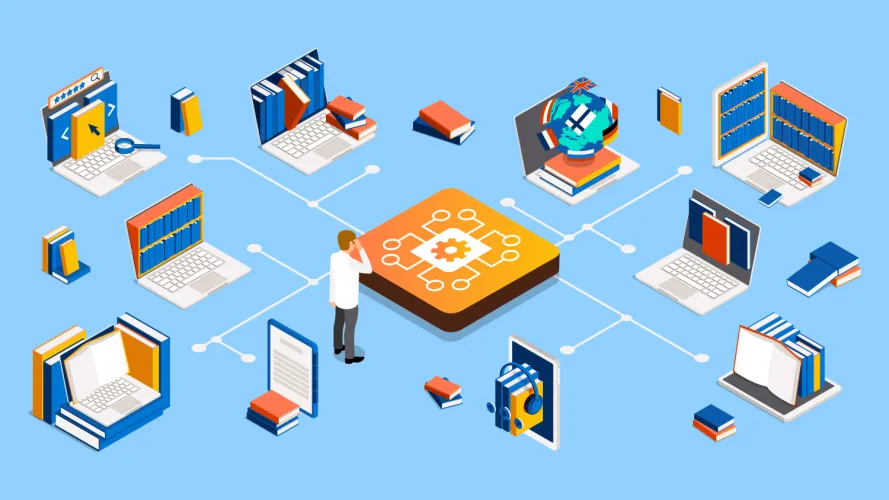
The timeline right now is “every week a new god-model drops.” In early December, alone, we’ve got GPT-5.1, Claude Opus 4.5, and Gemini 3 Pro all jockeying for leaderboard spots.
Underneath it, the more important shift is away from one giant do-everything brain and toward lots of smaller, task-specific brains orchestrated together. Analysts are literally predicting that by 2027, organizations will use small, task-specific AI models three times more than general-purpose LLMs – because they’re faster, cheaper, and more accurate once you bake in domain context.
Rather than one monolithic LLM, we’re seeing smaller fine-tuned models beat larger ones on targeted tasks with lower latency.
AIBES Tech of the Week
Picture your company’s “source of truth” data.
Is it ten versions of ThisOne_final_FINAL.xlsx scattered across email, SharePoint, and someone’s desktop? Is your “data platform” basically CTRL+F, manual copy-paste, and hoping no one fat-fingers a crucial cell/formula at midnight?
Now contrast that with a clean, stable UI where every meaningful entity in the business lives as persistent, structured data; not sheer-luck memory-work in an Excel graveyard.
AIBES is happy to hand over V1 of “DataOps” to its first client home this week! Instead of hunting columns, users log in, see canonical tables and manage them through targeteds and bulk Create, Read, Update and Delete actions and filters. And all of it lives under the protected security of our Airdex Platform. We’re thrilled with the release – YOUR data team could be too.

Framework We’re Using
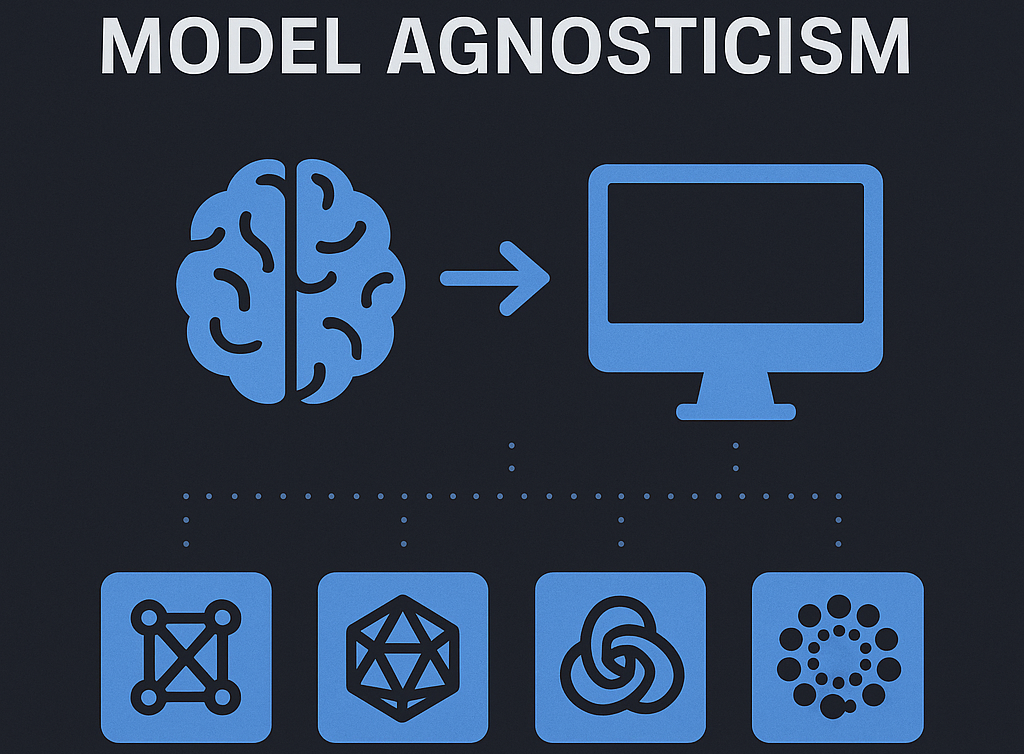
“Model agnosticism” for us means: no single model is sacred. Any capability in the stack—chat, retrieval, scoring, workflow selection, summarization—should be swappable between providers with minimal surgery. Architecturally, that looks like: a common interface for “do this task,” a separate routing and evaluation layer, and thin adapters around whatever frontier or open-weight model currently performs best for that slice of work. Think ports and adapters, but for LLMs.
AIBES builds solutions this way for all our clients — point the same workflow at GPT-5.1 today, Claude Opus tomorrow, and something even smarter next year—without rewriting the product.
Don’t get locked in – the AI space is changing fast.
Trending News
The loudest headline in AI right now isn’t just a new model—it’s a new power contract for the entire ecosystem. In early November, OpenAI and AWS announced a multi-year strategic partnership worth about $38 billion, giving OpenAI access to Amazon EC2 UltraServers, “hundreds of thousands” of accelerators, and the ability to scale to tens of millions of CPUs for generative workloads. This is OpenAI’s first major cloud deal after loosening its exclusivity with Microsoft, and it essentially formalizes AI as one of the biggest compute buyers on Earth.
Zoom out and you see an infrastructure arms race and analysts are already framing this as the next big “who owns the rails” moment—whoever controls GPUs, power, and data-center footprint effectively controls which models are economically viable.

Quote We’re Pondering
“Our goal is to solve intelligence and then use that to solve everything else.”
- Demis Hassabis (CEO, DeepMind)