
AIBES 5-Point Friday #14
From Japan's robot workers to The AI "New Deal" — here are 5 things our AI Business Engineers are excited about this week!
Signal Worth Noticing
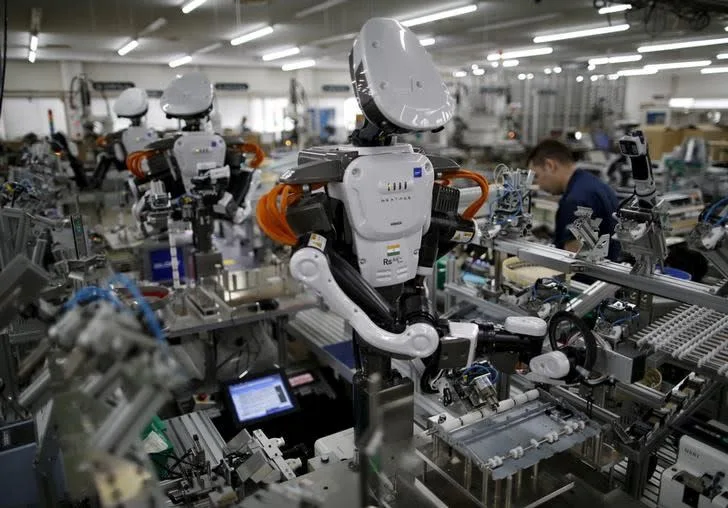
Physical AI is moving from demo theater to labor infrastructure. One of the clearest signs of maturity in AI is when deployment is driven by operational necessity rather than novelty. Recent reports of shifting economies and workforces in labor-strapped Japan are compelling because the drivers are industrial continuity and measurable performance in the real world. Robotics companies are being framed less as experiments and more as software-and-control layers that make automation economically usable. The important shift is that value is increasingly sitting in integration, control loops, and continuous improvement, not just in the underlying model. That is what makes physical AI feel closer to infrastructure than to a moonshot. It feels important now because customer-paid deployment is a much stronger signal than lab demos, and the real-world market is starting to demand exactly that.
Framework We’re Using
For small to medium knowledge bases, the new hot method is a strong corrective to overengineered RAG. Like every textbook we had in school, this new “LLM Wiki” idea goes back to the traditional “Table of Contents + Index” roots. The argument is that instead of rediscovering the same knowledge on every query through embeddings, chunking, retrieval, and ranking, the model should compile the source material into a structured, interlinked markdown wiki that lives as a persistent artifact, can be versioned in git, and can be continuously improved over time. That is appealing because it turns knowledge from a live retrieval problem into a maintainable system: more legible to humans, easier to inspect, easier to lint, and cheaper to keep current. Creators explicitly frame it as especially practical at moderate scale, where the knowledge base is large enough to matter but not so large that you need full retrieval infrastructure just to stay afloat. The deeper lesson is useful far beyond this specific gist: when the corpus is bounded, compilation often beats search.


AIBES Tech of the Week
For apps with lots of live, cascading data and constantly changing graph states (think financial planning and analysis use-cases), “Zustand Stores” are compelling because they give users a small, fast state layer without forcing every update through React-wide rerender patterns. This methodology emphasizes slice-based selection, shallow comparison for combined selectors, and fine-grained subscriptions that can fire synchronously outside the normal UI render path. In practice, that maps well to graph-heavy interfaces: keep raw incoming data in the store, derive only the series or views each chart actually needs, and subscribe expensive recalculation only to the relevant state transitions. The payoffs are speed and stability. You stop making the whole app react to every data tremor, and the UI starts feeling fast because only the parts that should move are moving. AIBES has transitioned two new products to this method and they’ve both gotten more responsive – does your company have any software that needs a pick-me-up?
Trending News
Windows 11 adds haptic feedback to core UI actions
Snapping, resizing, and even hovering over controls now trigger tactile responses.OpenAI proposes sharing AI gains with workers
Plans include tax shifts, shorter workweeks, and public wealth redistribution from AI profits.Gemini adds stronger mental health safeguards
Google is rolling out crisis detection improvements and clearer escalation to real support.Anthropic tests powerful cyber-defense model with big tech partners
New model is being used to find serious vulnerabilities, including zero-days, before any public release.Apple explores on-device AI for more private intelligence
Apple is reportedly doubling down on local AI processing to reduce cloud dependency and improve privacy.

Quote We’re Pondering:
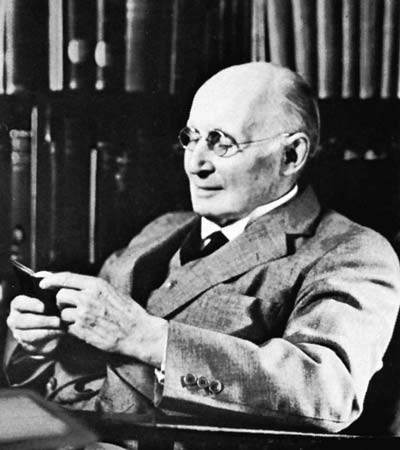
“Civilization advances by extending the number of important operations which we can perform without thinking about them.”
- Alfred North Whitehead — an English mathematician and philosopher