AIBES 5-Point Friday #3
From latency wars to the AI fashion debate - here are 5 things our AI Business Engineers are excited about this week!
Signal Worth Noticing
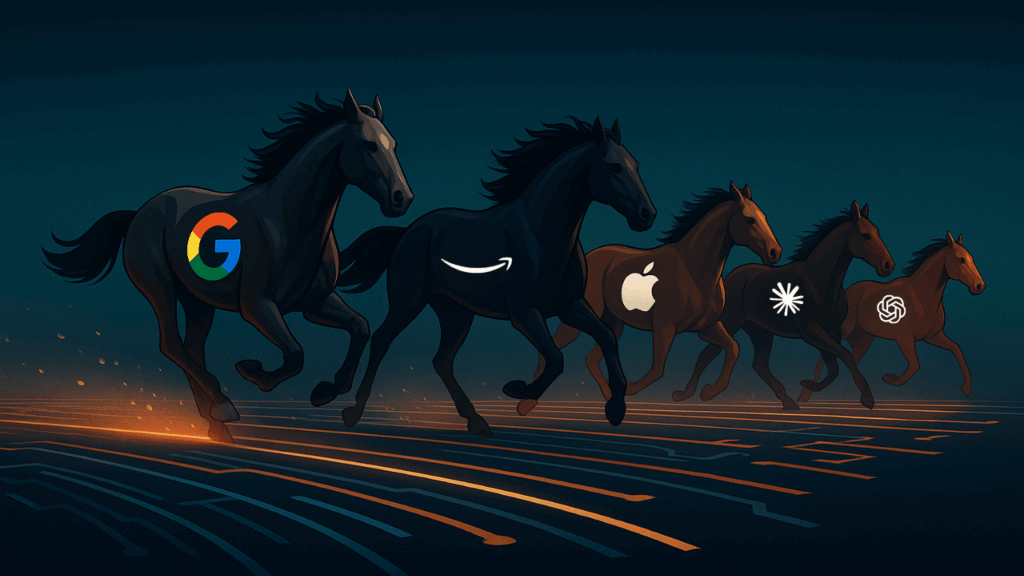
The AI “model wars” are turning into “latency wars.” Google just made Gemini 3 Flash the default in the Gemini app and is rolling it into Search’s AI Mode—explicitly positioning it as “Pro-grade reasoning” with Flash-level speed. It’s a bet that mainstream users prefer answers that feel instantaneous (even if the ceiling is slightly lower) and will only tolerate deeper reasoning when it’s invisible or clearly worth it.
In response, OpenAI, just rolled back automatic model routing for Free and $5/month Go users and returned them to GPT-5.2 Instant by default, with reasoning models now something you manually opt into. WIRED reports the router increased advanced “reasoning” usage among free users (and raised serving costs), and that it likely hurt engagement because waiting on “thinking dots” is friction. The winning AI (of the moment) isn’t the smartest but the fastest.
AIBES Tech of the Week
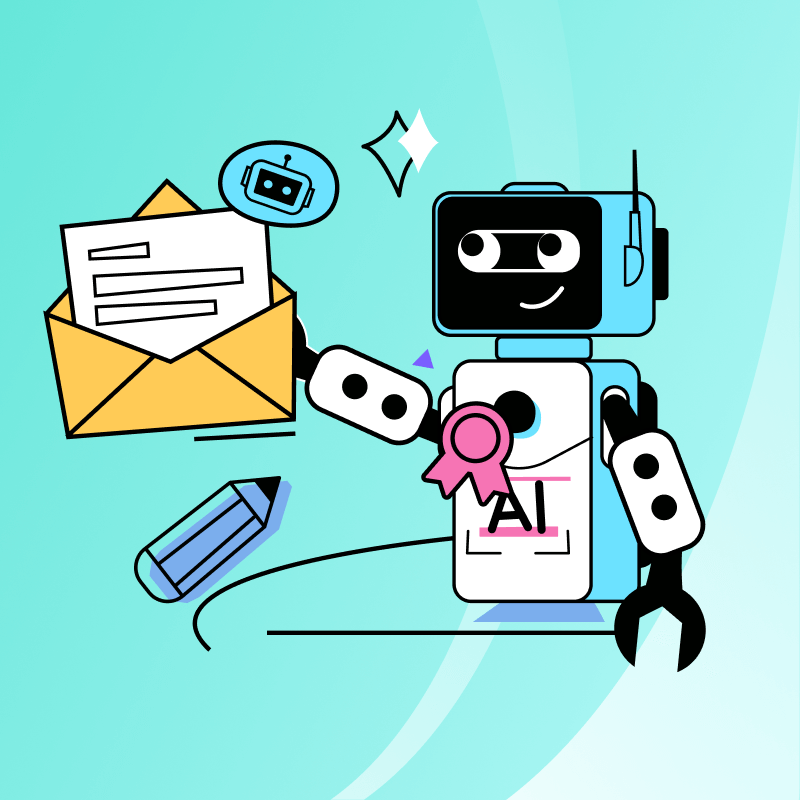
This week, AIBES demoed a proof-of-concept app to a client that needs support to tackle its endless stream of incoming reservation requests. Using an LLM to parse emails and populate a concise data grid, this app’s dashboard highlights key info, hooks up to calendar apps and scores prospects based on the client’s rule engine.
Instead of a salesperson manually scanning every message for a first pass, AI can identify which emails matter most, sort leads by goodness of fit into different priority “bins” and draft replies (accept booking, solve availability conflicts, etc.) that are relevant to the recipient, the event/space specifics and the company’s calendar.
For businesses that depend on timely, clear communication, AI email systems have become indispensable — does your business need tools like this?

Framework We’re Using
In a world where AI can vibe-code any app you can think of, the first standard business practice to fall short is domain understanding.
One of the most important steps in building software or AI solutions that genuinely work is truly understanding the domain in which the product will operate. Domain-Driven Design prioritizes this deep pre-emptive research. Vibe-coding is probabalistic – the LLM will dull down even the most specific prompt to the most likely route toward understanding a complex business problem — whereas a human-led, domain-specific (and truly useful) solution specializes to think laterally.
Getting this foundation right sets up every subsequent phase of development for success. Yes – anyone can “whip up” an app by handing it over to AI; letting it abstract real human insight down to a probable denominator, but an actual fix needs true TLC that amplifies the nuances of a business’s needs.
Trending News
The U.S. Department of Energy signed AI collaboration agreements with major tech companies to accelerate scientific research, energy innovation, and computing infrastructure — signaling government-industry alignment on strategic AI goals.
Anthropic announced updated Claude tools with “skills” aimed at helping companies better automate workplace tasks and provide an open standard for interoperability across AI platforms.
Zara is using AI to generate fashion imagery with real-life models, a move that’s sparking industry debate about the role of AI versus human creative work.


Quote we’re pondering:
“Innovation distinguishes between a leader and a follower.”
- Steve Jobs, Co-founder of Apple