
AIBES 5-Point Friday #6
From AI capex to a smarter Siri - here are 5 things our AI Business Engineers are excited about this week!

Signal Worth Noticing
China is turning “who gets to buy compute” into an industrial policy tool.
This week, major Chinese tech firms were allegedly granted conditional approval to purchase more than 400,000 Nvidia H200 GPUs. By using licenses and conditions, Beijing can decide which companies get scarce, high-end training capacity first, which projects get priority, and what tradeoffs buyers must accept.
Early reporting suggests the conditions are still being finalized and may include constraints that shape behavior, such as procurement requirements that keep demand flowing to domestic chip suppliers alongside imported accelerators. The strategic question for the next quarter is simple: which organizations are being allowed to scale compute, under what terms, and how those terms reshape the competitive landscape.
Framework We’re Using
Software solutions should absolutely be designed to a user’s initial specs — ship what they asked for, clearly and reliably. But at AIBES, we’re also pushing a second principle: design some of the database “settings” to be configurable by the user.
Practically, that means building with:
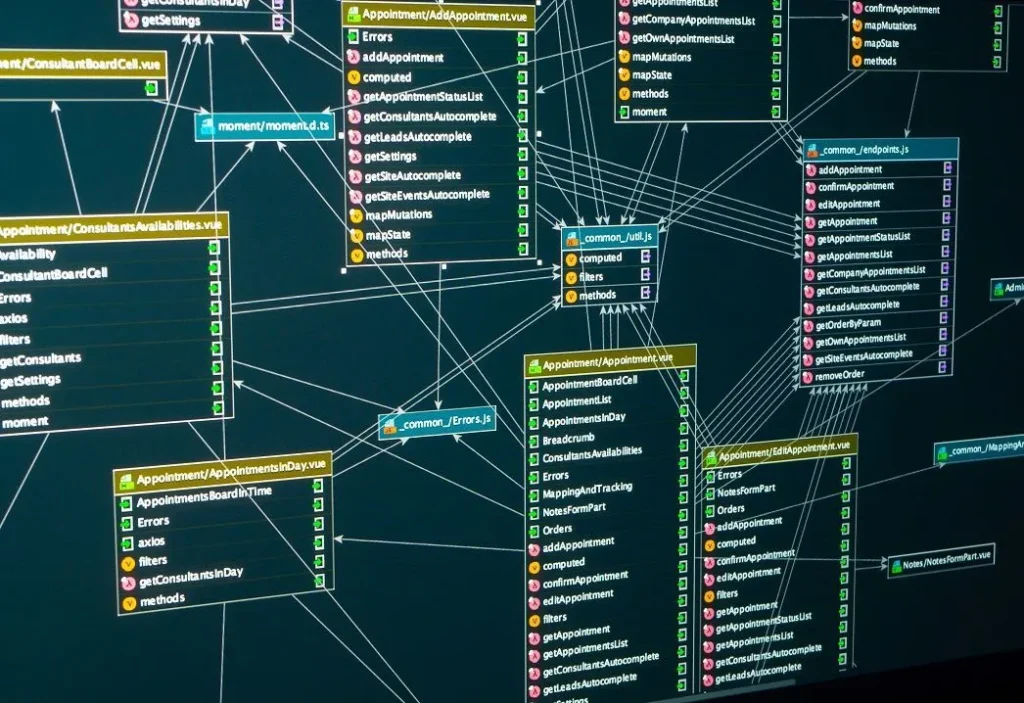
Table-driven configuration (parameters, thresholds, weights, feature flags, mappings).
Versioned definitions (what did “Metric X” mean last quarter vs now?).
UI-accessible “knobs” that write to those config tables.
Then, instead of hard-coding business logic into one-off queries, you’re operating a system where logic is data—and the product can evolve without breaking.

AIBES Tech of the Week
This week’s big project has been designing an advanced mathematical equation for a client that needs deeper insights from their testing equipment data –> and the schema logic needed to pull, transform, and derive these new metrics across the database.
Why it’s tricky in practice:
Multi-table dependency chains: your “simple KPI” often spans raw events, session metadata, user attributes, calculation tables, and business rules that might change over time.
Time + grain alignment: tables rarely share the same keys or time granularity; joins can silently create duplicates, dropouts, or mismatched windows.
Tying into this week’s Framework: When AIBES makes the parameters of these equations user-configurable (via a UI that writes to table-driven parameter sets), we unlock real product potential.
Trending News
OpenAI launched Prism, a free LaTeX-native workspace for scientists that integrates GPT-5.2 into research writing/collaboration (with features like unlimited projects/collaborators).
Apple explained more about how Gemini-powered Siri will work. Apple’s implementation will blend on-device processing for simple tasks with cloud-based inference via its Private Cloud Compute environment for harder requests, preserving user data privacy while tapping Gemini’s power for reasoning and understanding.
Google rolled out Chrome’s “Auto Browse” agent (powered by Gemini 3) to handle multi-step web tasks, with an initial U.S. availability tied to specific tiers.
- Meta researchers unveiled RTTP (Real-Time Trend Prediction via Continually-Aligned LLM Query Generation), a system that uses a continually updated LLM to create synthetic search queries from fresh posts so trends are spotted before user search spikes form. This could change the way emerging trends are detected online.


Quote We’re Pondering:
“We can only see a short distance ahead, but we can see plenty there that needs to be done.”
- British mathematician and computer scientist