From re-imagined org charts to overnight code factories — here are 5 things our AI Business Engineers are excited about this week!
Signal Worth Noticing
Org design is becoming an ML advantage.
As models converge on “good enough” capability, the bottleneck is moving to the loop: who can generate high-signal data, run evals, and push post-training iterations faster than everyone else, both safely and repeatedly.
This week, Meta’s move to stand up a new applied AI engineering org (explicitly framed as building a “data engine” to make models improve faster) is a tell. Flat teams, tooling-first execution, and dedicated data pipelines are starting to matter as much as the next architecture tweak. The winners will have better researchers, more GPUs and they’ll have the org chart that turns research into compounding, production-grade gains. The strategic question for the next quarter is simple: what is your iteration loop, and how quickly can it learn?
Framework We’re Striving For
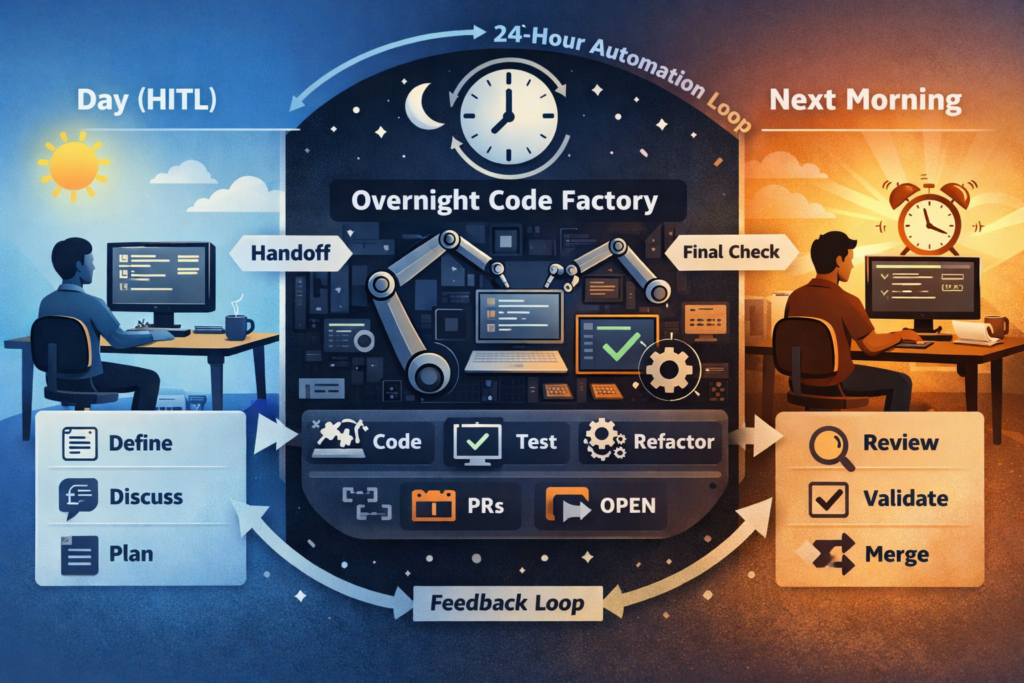
AIBES’s goal: protect our highest-impact human hours (requirements, edge cases, acceptance criteria) and then let automation compound overnight with clean artifacts ready for review.
Day: Business Engineers align on “definition of done,” collaborate with clients, write sharp tickets, and set eval hooks before any code is generated.
Night: agents run in parallel to implement, refactor, write tests, and open PRs.
Next morning: one HITL merge governor reviews diffs, validates against acceptance tests, and ships – or works with Buseiness Engineers to solve any issues.
Done right, engineering becomes a 24-hour loop where humans steer and agents execute.
AIBES Tech of the Week
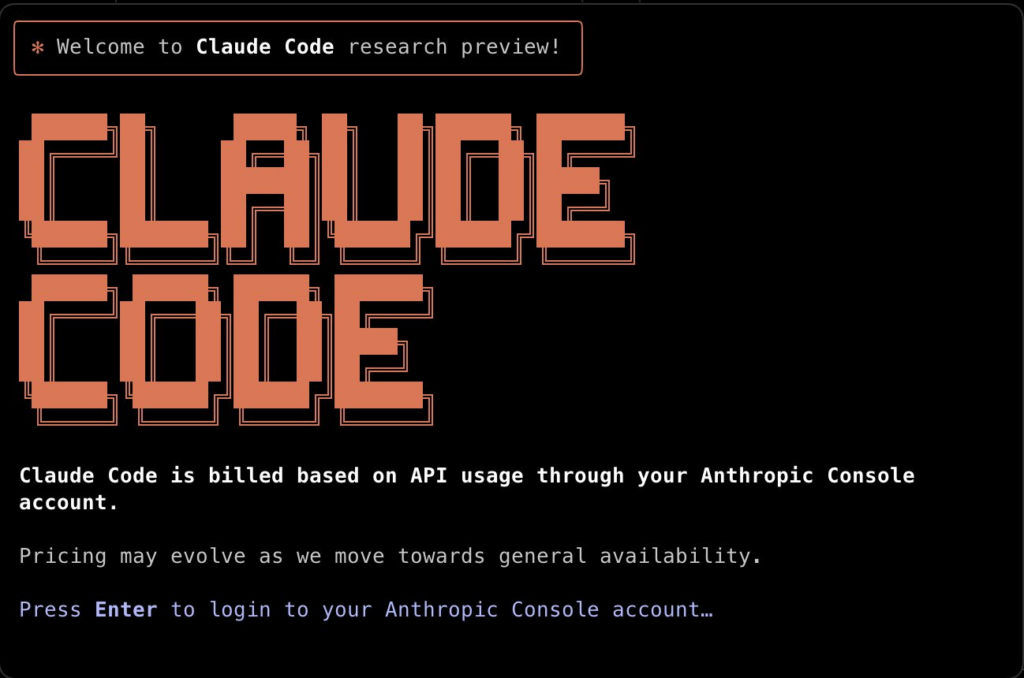
Claude Code is a terminal-native, agentic coding tool: it understands your codebase, edits files, runs commands, and handles git workflows through natural language -> right where developers already work.
A CLI-first approach is powerful because outputs can be piped between tools, workflows can be scripted, and a strong session can become a repeatable command. Keeping everything in the terminal reduces context switching, so planning, executing, testing, and committing stay in one flow. And because the terminal records logs, diffs, and command history, it creates a clear audit trail for review and reproducibility.
Tying into this week’s Framework: CLI-native agents are the backbone of overnight code factories. This means they can run, verify, and open PRs while you sleep, then hand you something reviewable at standup.
Trending News
OpenAI released GPT-5.4 (plus GPT-5.4 Thinking + Pro), pushing native computer-use and long-horizon “professional work” deeper into the flagship line.
OpenAI updated its Department of War agreement language to make domestic-surveillance guardrails more explicit.
Google’s March 2026 Pixel Drop added Gemini-driven automation (“Gemini Tasks”) and other AI-forward OS features.
Nvidia CEO Jensen Huang said a $100B OpenAI investment is “probably not in the cards,” emphasizing how quickly AI capital narratives can swing.
Quote We’re Pondering:
“Trust, but verify”
Russian proverb popularized in the U.S. by Ronald Reagan
Thanks for Reading! See you for the next 5-Point Friday from AIBES!