
Signal Worth Noticing
The AI Price War Just Changed What It's Fighting Over
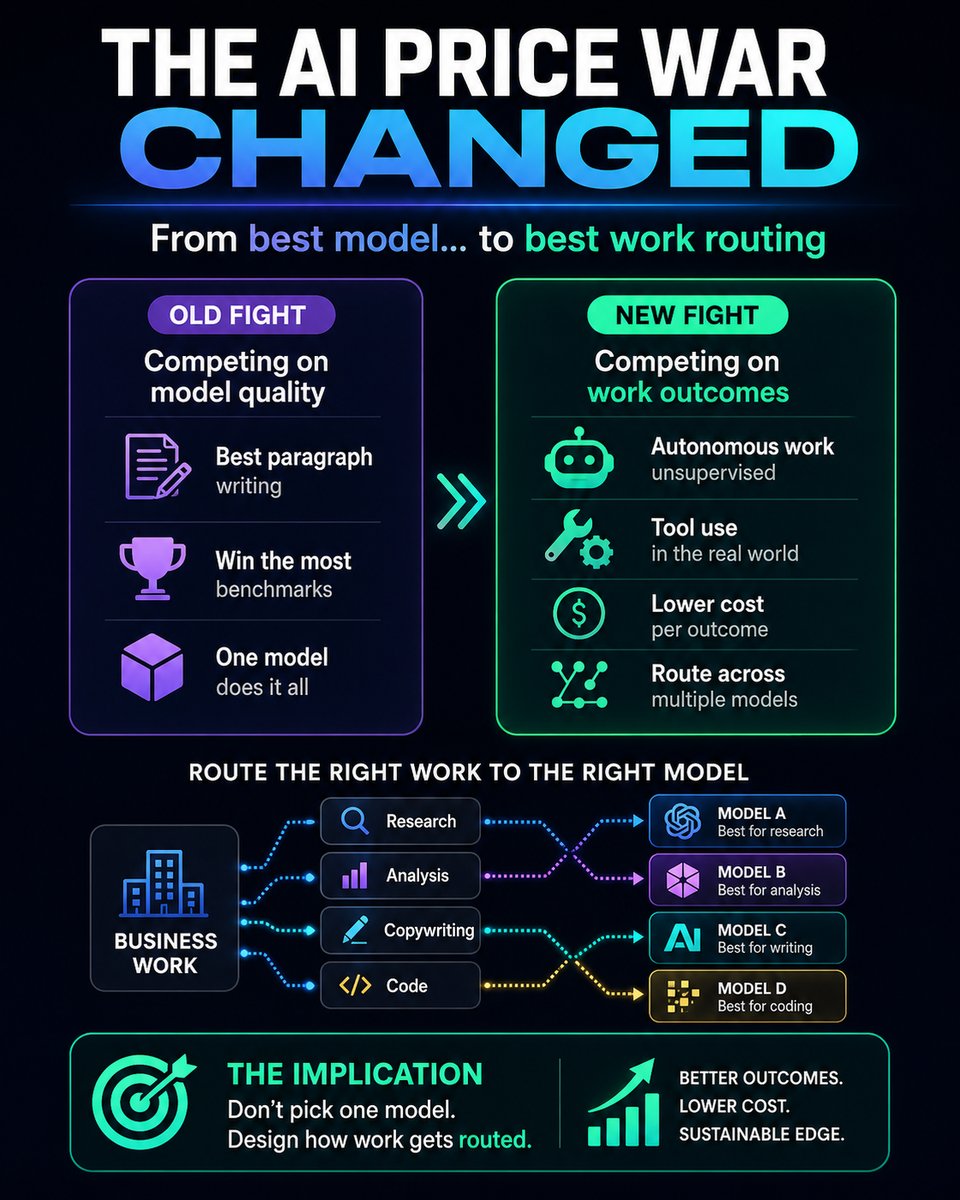
In the space of one week, Anthropic shipped Claude Sonnet 5 and OpenAI previewed the GPT-5.6 family (Sol, Terra, Luna), and both framed the release around the same axis: near-flagship agentic performance at a fraction of flagship price. That's a different fight than the one from a year ago, which was about who could write the best paragraph or top the most benchmark leaderboards. The pitch now is how much autonomous, tool-using work a model can responsibly run unsupervised, for how little, and every major lab is racing toward the same answer. The real decision for any business building on these models is shifting from which model to buy to how to route work across them.
Framework We're Using
Ideas Are Cheap, Organizational Change Isn't
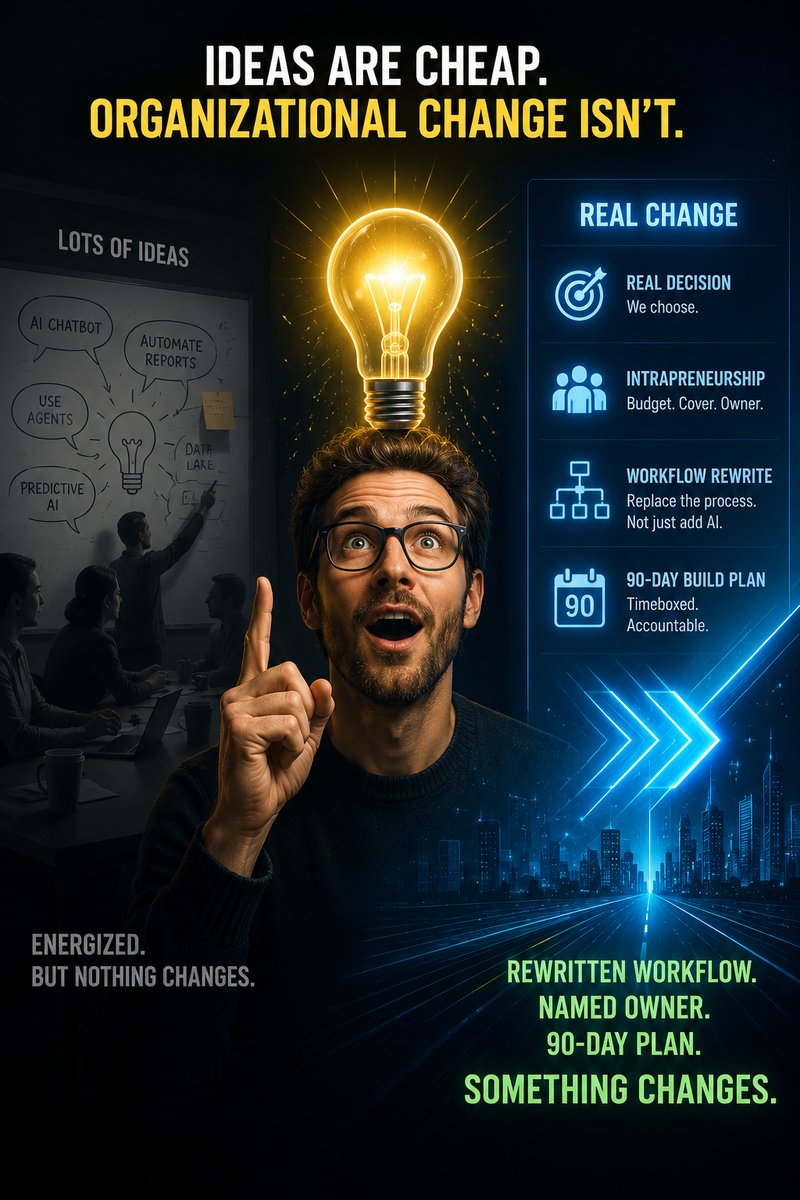
A conference room full of good ideas has never once rewired how a company actually operates. What changes an organization is the unglamorous work: a sprint that forces a real decision, an intrapreneurship track that gives someone budget and cover to build, a workflow rewrite that replaces the process rather than annotating it with a chatbot. We see this constantly at AIBES. The client who leaves an offsite energized has learned something; the client who leaves with a rewritten workflow, a named owner, and a 90-day build plan has changed something. The idea is the cheap part. The rewrite is the whole job.
AIBES Tech Of The Week
Tiered Agent Routing
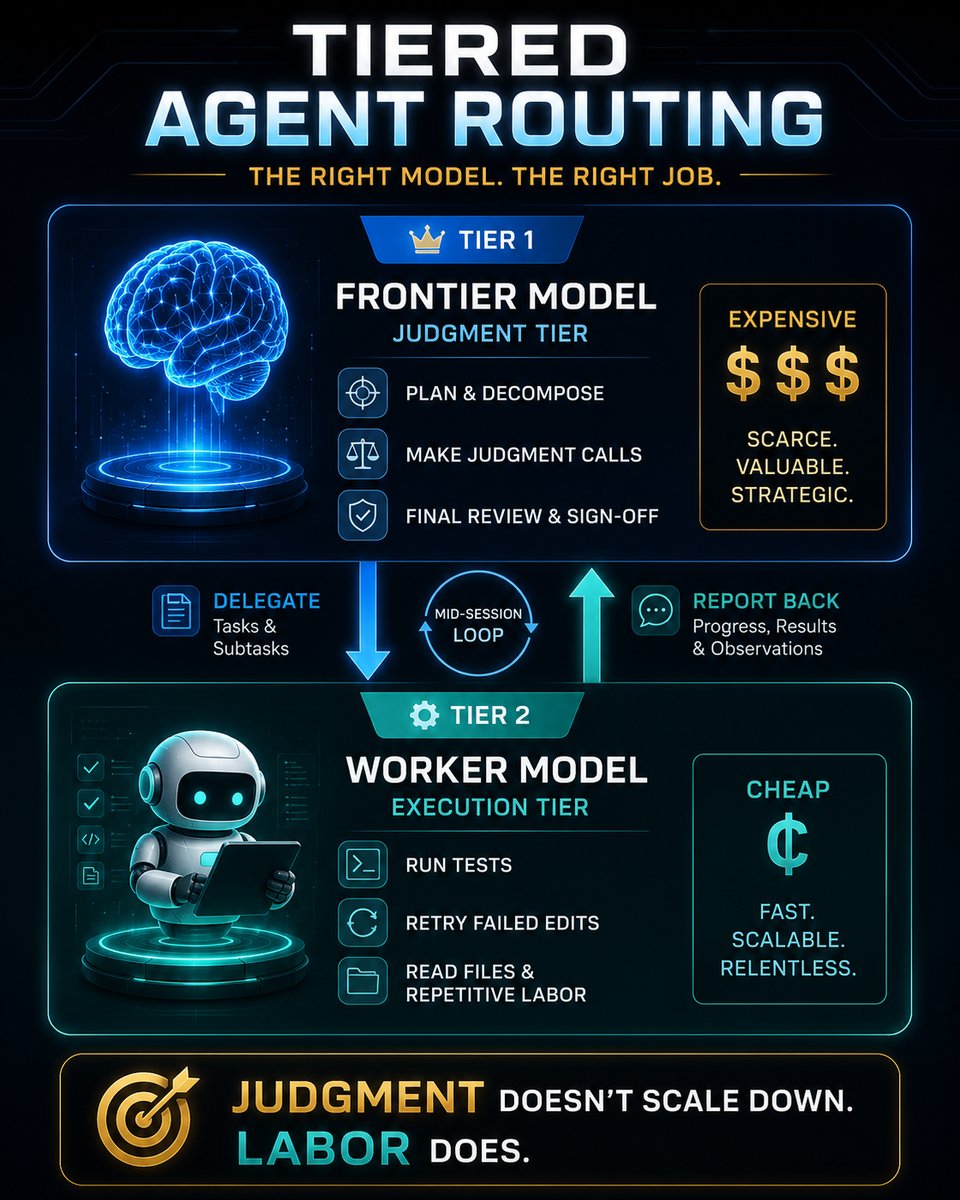
The expensive part of an agent usually isn't the thinking, it's the typing: running tests, retrying failed edits, re-reading files it already read. The pattern we lean on is a two-tier harness. A frontier model stays in charge of planning, judgment calls, and final review, while a cheaper model handles the mechanical execution underneath it and reports back mid-session. Done well, this cuts cost sharply without touching the quality of the decisions that actually matter, because the expensive model is never doing cheap work. The discipline it forces is useful on its own: it makes you name, explicitly, which parts of a workflow require judgment and which are just labor. Run it like you'd staff a team, judgment doesn't scale down, labor does.
Trending News
The headlines that fit the bigger pattern
- OpenAI has proposed giving the U.S. government a 5% equity stake, structured like a sovereign wealth fund. Why it matters: it's the first serious proposal that would make the federal government a financial stakeholder in a frontier AI lab it's also meant to regulate.
- GPT-5.6's Sol, Terra, and Luna models shipped in a preview limited to roughly 20 government-approved companies. Why it matters: frontier model access is starting to look like an export-control decision rather than a product launch.
- Claude Sonnet 5 became Anthropic's new default model, priced below both Opus 4.8 and GPT-5.5. Why it matters: "flagship-quality, mid-tier price" is now the industry's standard opening move, not a one-off.
- Cognition's Devin Fusion cut agentic coding costs roughly 35% using a two-model harness. Why it matters: it's a working example of the tiered-routing pattern more teams will need as agent usage scales past pilot volume.
- Reporting described a bottlenecked, 50:1 IC-to-manager structure inside Meta's new Applied AI unit. Why it matters: it's a real-world reminder that flattening the org chart doesn't automatically flatten the coordination problem.


Quote We're Pondering
"We shape our tools, and thereafter our tools shape us."
- John Culkin, a media theorist and Fordham University professor who popularized an idea closely associated with his colleague Marshall McLuhan.