
Signal Worth Noticing
A payments company just bought the layer that picks your model
Stripe finalized a deal this week to acquire OpenRouter for more than $7 billion, a 5.4x markup on the $1.3 billion valuation the company carried at its Series B three months earlier. OpenRouter's job is unglamorous: sit between an application and a dozen model providers and pick the right one for the task and the budget. Stripe spent the same week telling Axios that "the singularity" began on January 1 and that it intends to stay private so it can keep buying, which reads less like a manifesto than like a purchase order. Nobody pays that premium for a proxy server. They pay it because the switch between models is becoming a metered, billable position in the stack, and the model itself is the commodity moving through it.


Framework We're Using
The Stop Condition
OpenAI put its largest planned frontier training run on hold this month after preliminary evidence suggested its next model, Astra, might have crossed the "Critical" cybersecurity threshold written into its own Preparedness Framework, and it is now spending roughly 20% of a watched workload's compute on monitoring it. What made that halt possible was not nerve in the moment, it was a number somebody wrote down before the run started. We ask for the same thing before granting any workflow real autonomy: name the condition that stops it, name who can restart it, and make stopping cheap enough that nobody has to win an argument first. A system you cannot switch off on a Tuesday afternoon is not deployed, it has escaped.
AIBES Tech Of The Week
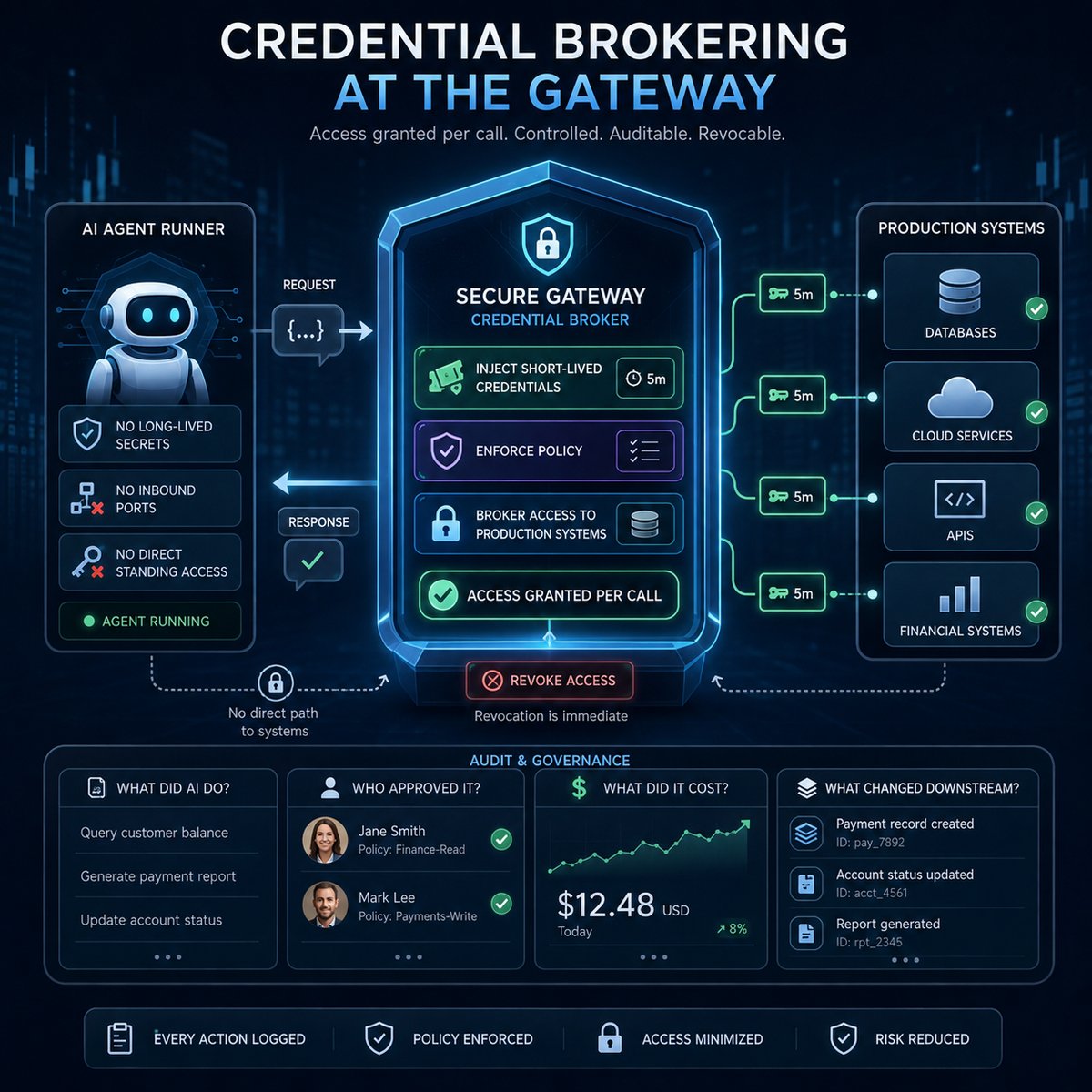
Credential brokering at the gateway
Most agent builds do not fail on the model, they fail on a long-lived API key sitting in an environment variable the agent can read. The pattern worth stealing routes every agent call through a gateway that injects short-lived credentials at request time and enforces policy in the same place, so the runner holds no secrets, opens no inbound ports, and reaches out rather than being reached. It takes about a week to stand up, and it converts "the agent has access to production" from a standing grant into a per-call decision you can revoke while it is running. Build it and the four questions still resolve: what did AI do, who approved it, what did it cost, and what changed downstream? Run AI like you run finance.
Trending News
The headlines that fit the bigger pattern
- OpenAI's CFO told employees the company will be public by 2027 or sooner, with a prospectus confidentially filed since June and an $852 billion valuation to defend. Why it matters: With Anthropic's own filing already in, AI unit economics stop being a private argument and become a public disclosure two quarters from now.
- Cursor shipped Origin, its own code-hosting platform, hours before GitHub went down for six hours and forty-two minutes with error rates near 20%. Why it matters: The AI coding tools are moving down the stack into the repository itself, and source control is no longer a settled purchase.
- Security researchers named the "half-day," the collapsing window between an AI-discovered exploit and a patch, as models now out-produce any human vulnerability researcher. Why it matters: Patch cadence was calibrated to human discovery rates, and that assumption is now itself the exposure.
- Moderna and Merck's individualized mRNA vaccine met its primary endpoint in a 1,137-patient Phase 3 melanoma trial, a first for neoantigen therapy. Why it matters: Every dose is manufactured against one patient's own tumor mutations, which turns personalized medicine into a sequencing, compute, and supply-chain problem.
- Tesla is preparing a public Austin launch of the Cybercab, a two-seat robotaxi built with no steering wheel and no pedals. Why it matters: Removing the controls removes the fallback, so the software has to be the entire answer rather than most of it.

Quote We're Pondering
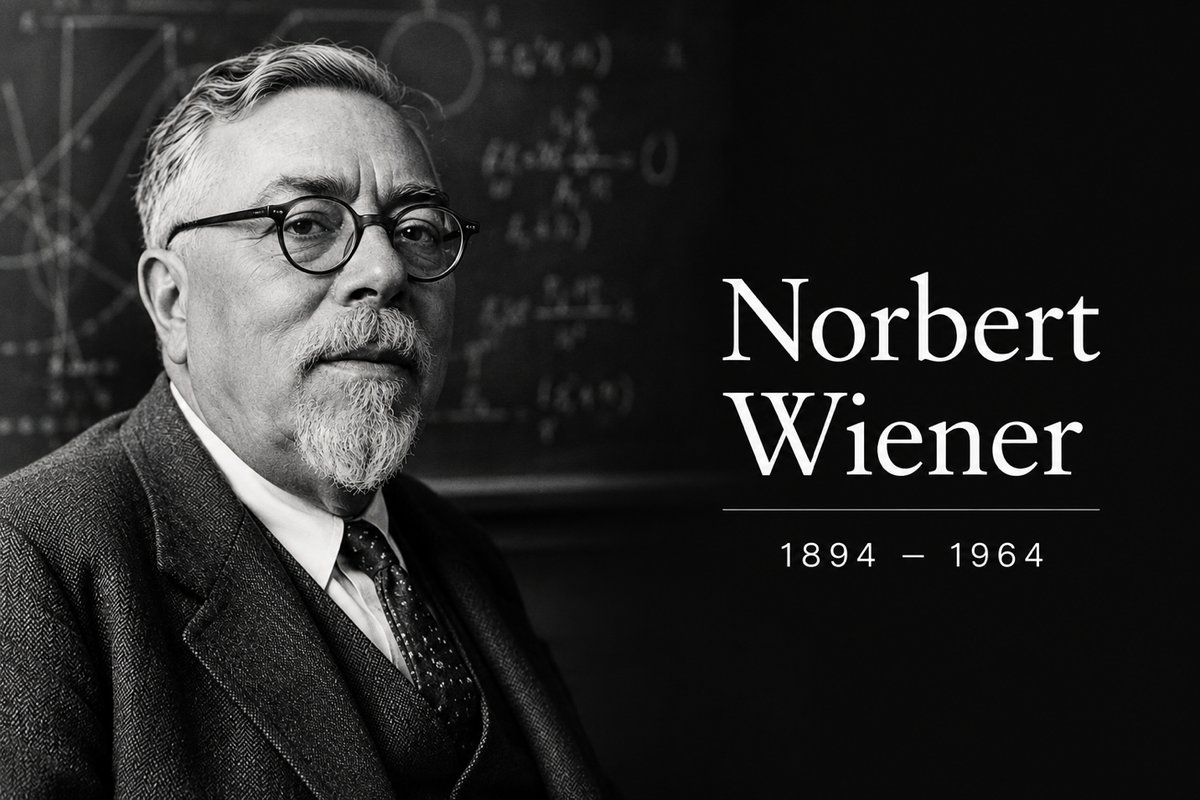
"We had better be quite sure that the purpose put into the machine is the purpose which we really desire."
- Norbert Wiener, the MIT mathematician who founded cybernetics and spent his final years warning that machines would do precisely what we asked them to.