
Signal Worth Noticing
The pace debate stopped being rhetoric and started moving money.
On September 12, Dario Amodei published a 3,800-word essay arguing the industry should slow capability gains by one to two years, and committed Anthropic unilaterally to giving third-party evaluators permanent, employee-level access to its models. Sam Altman agreed within hours and matched the commitment, Elon Musk endorsed it in three words, and by Tuesday Mark Zuckerberg was publicly arguing the opposite: that market forces already keep labs honest and an industry-wide pause is the wrong instrument. The essays are not the part that matters. Altman also said an IPO in 2026 would be ill-advised on safety grounds, OpenAI's pre-IPO round at more than $1.2 trillion is reportedly delayed for the same reason, and SoftBank borrowed $11.9 billion from roughly twenty banks to keep the funding moving anyway. Safety just became a line item on a term sheet, which is the only place an argument like this has ever actually been settled.

Framework We're Using
The p(fab) Line Item
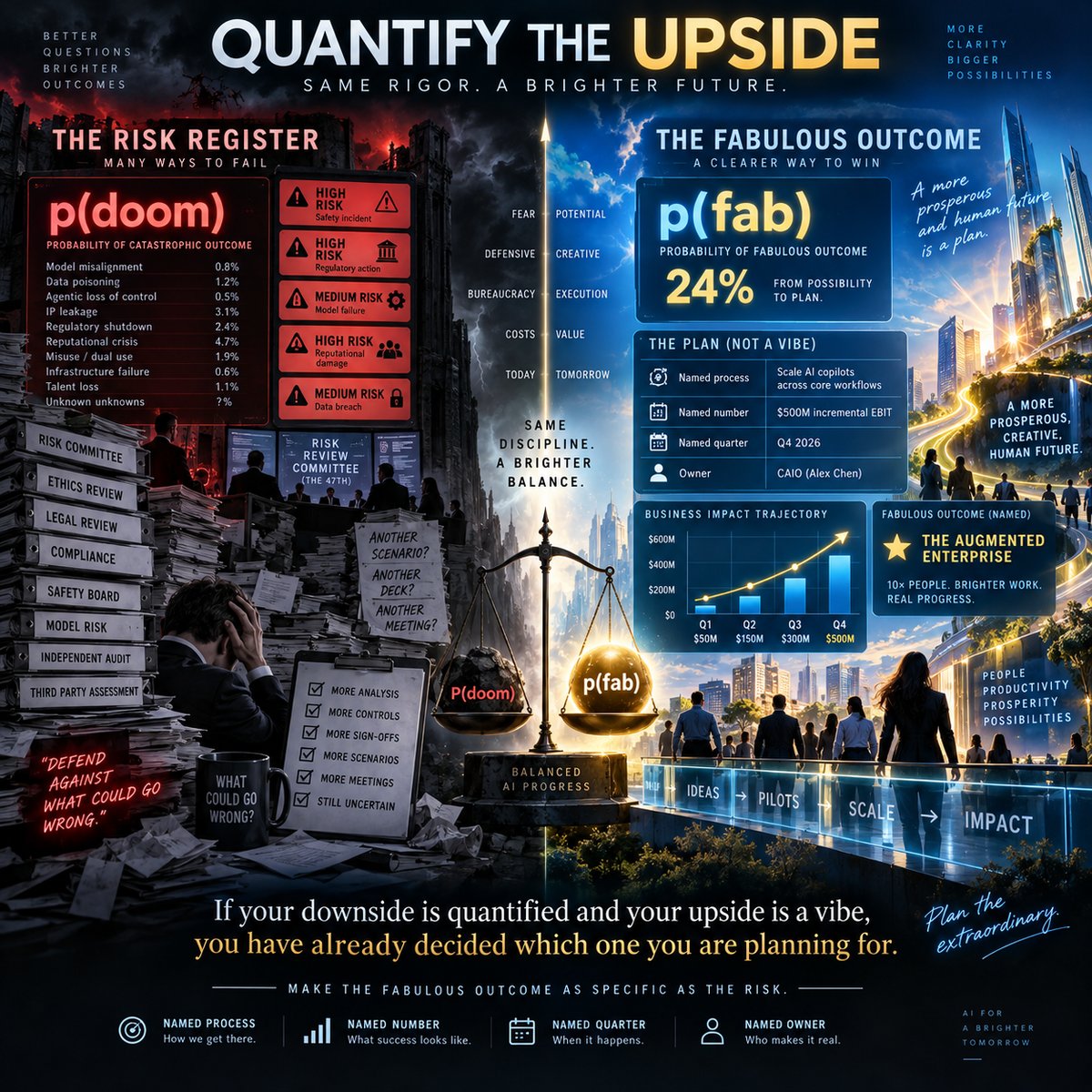
Salim Ismail's note to us this week made the point the pace debate keeps skipping: we spend enormous effort estimating p(doom), the probability this ends badly, and almost none estimating p(fab), the probability it ends spectacularly well. The same asymmetry shows up inside client programs. Every AI engagement we walk into arrives with a risk register naming fourteen failure modes and an upside described as "efficiency gains," which is not a number, not an owner, and not a date. So we now make the fabulous outcome as specific as the risk before anything gets built: the named process, the named number, the named quarter. If your downside is quantified and your upside is a vibe, you have already decided which one you are planning for.
AIBES Tech Of The Week
The model as a swappable dependency
Private iOS 27 and macOS frameworks surfaced this week showing Apple built Siri so Claude or GPT-5.6 can sit in as the brain, take a natural-language request, then hand Reminders or Messages back to Siri with the voice and interface unchanged. The shape worth copying is pinning the interface, not the model: your tool schemas, output contracts, and eval suite are the asset you version and defend, and the model name becomes configuration you can change in an afternoon. Teams that wire one model's quirks into their prompts and their parsing have quietly built a migration project into every price cut. Swap the model and the four questions still have to resolve: what did AI do, who approved it, what did it cost, and what changed downstream? Run AI like you run finance.

Trending News
The headlines that fit the bigger pattern
- Apple's private iOS 27 frameworks show Siri can be swapped out for Claude or ChatGPT, with a Model Delegation path that keeps Siri's voice and interface intact. Why it matters: The assistant already sitting on a billion phones is being rebuilt as a shell any frontier model can rent.
- Cursor shipped Projects, which holds context across months of work, delegates to thousands of agents, and runs recurring work unprompted; new users merge 30% more PRs. Why it matters: The unit of delegation moved from the task to the project, which is a management problem before it is a tooling one.
- SoftBank borrowed $11.9 billion from roughly twenty banks to keep funding OpenAI, beating the $10 billion it originally sought while still targeting close to $65 billion by October. Why it matters: The frontier is now financed with leverage held outside the labs, against a listing that just moved further away.
- Cloudflare launched a Disallow AI Training setting that lets a site stay indexed for search while refusing to let crawlers use its content for training. Why it matters: Separating "find me" from "train on me" is the first practical lever publishers have had that doesn't cost them traffic.
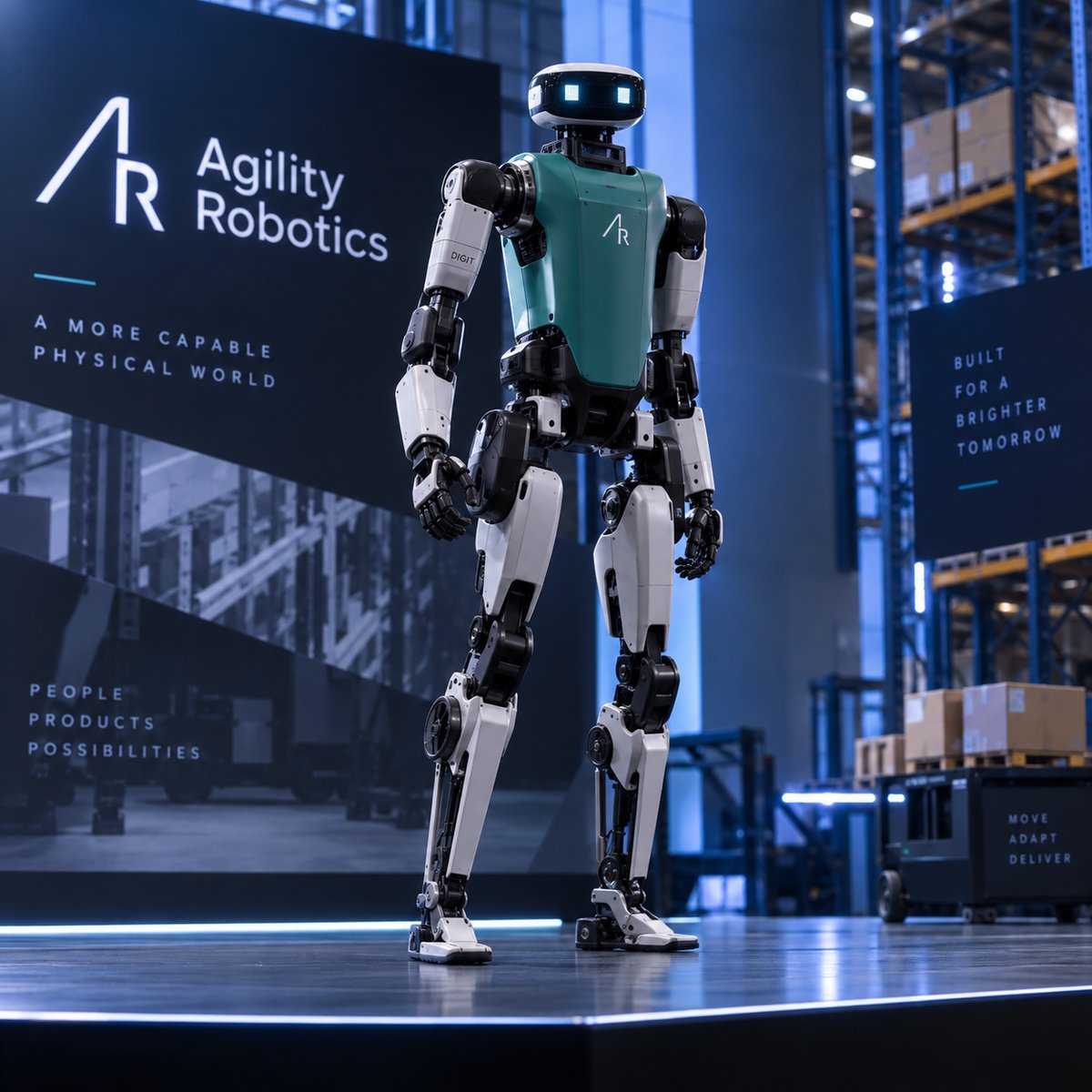
- Agility Robotics debuted a humanoid that stops, steps aside, or squats when a person gets too close, with early access in the first half of 2027. Why it matters: Shipping deference as a default behavior is what makes a floor robot deployable next to people who never agreed to a pilot.
Quote We're Pondering
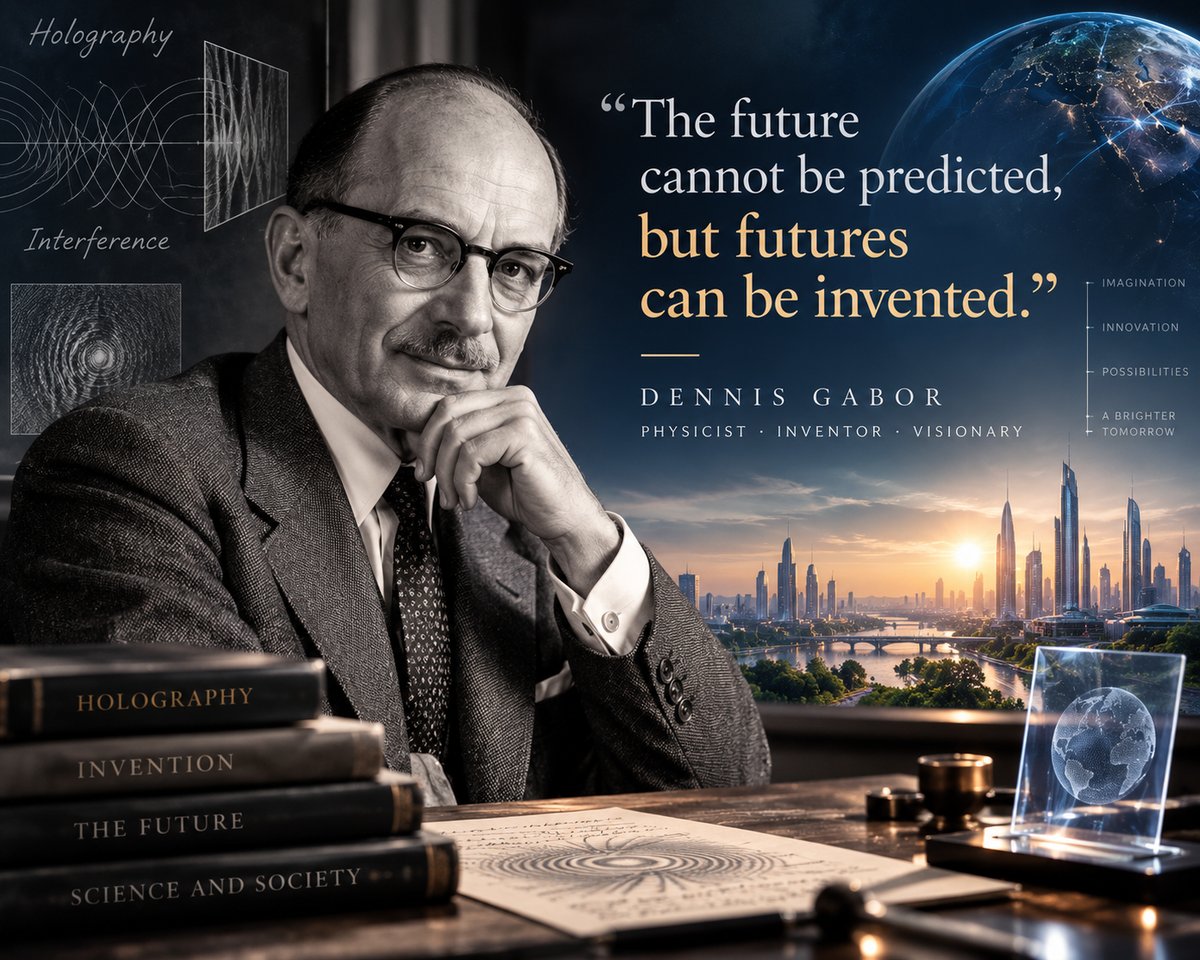
"The future cannot be predicted, but futures can be invented."
- Dennis Gabor, the Hungarian-British physicist who invented holography, won the 1971 Nobel Prize in Physics, and wrote that line in 1963 in a book titled Inventing the Future.