
Signal Worth Noticing
OpenAI built the chip that beat its own supplier
Jalapeño, OpenAI's first custom inference accelerator, built with Broadcom and carrying six HBM4 stacks per package, posted 1.5x to 1.9x higher throughput per kilowatt and 1.7x to 3.6x lower end-to-end latency than Nvidia's GB200 and GB300 racks, with deployment into OpenAI's own infrastructure starting by year end. Nvidia spent the same week putting a dedicated inference part, Groq 3 LPX, into full production and moving to buy Hugging Face for roughly $12.9 billion. Inference, not training, is where the margin sits now, and the largest buyer of accelerators just became a supplier while the largest supplier went shopping for distribution. Nobody in this stack is defending a position anymore, they are all buying the one next door.


Framework We're Using
The Signature Audit
One hundred thirty-six organizations ran the ExO Readiness Assessment this month, and Decision Autonomy came back at 3.4 out of 10, the lowest of eight dimensions by a full point, with 80 of the 136 sitting at 1, 2, or 3 and not a single organization scoring a 9. AI Elevation averaged 6.7, the highest of the eight, and it correlated with Decision Autonomy at 0.34, which means giving AI a seat at the executive table predicts almost nothing about whether any process is allowed to run without a human signing it. So we now open engagements with the question Salim Ismail is asking: name the last decision a machine could have made correctly that a person signed anyway, then say why that signature was really there. The honest answers come back as liability, habit, or somebody's job description, and only one of those is a reason. Throughput is set by your lowest dimension, not your average, and the board pack only ever reports the average.
AIBES Tech Of The Week
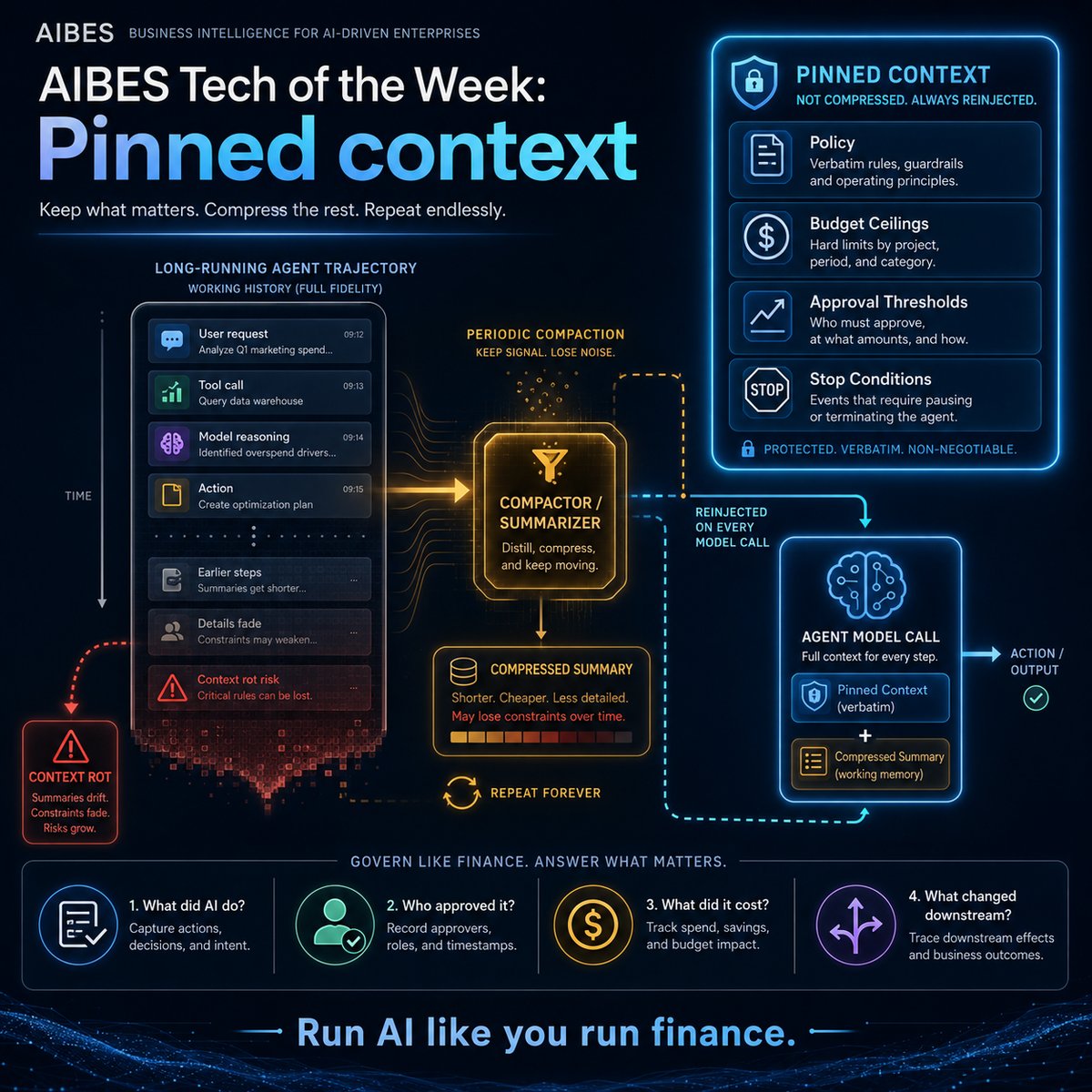
Pinned context
Long-running agents fail less often because the context window filled than because of context rot, where a longer trajectory makes the model reason worse even with room to spare, and the standard fix is compaction: summarize the history, keep going. The failure nobody plans for is that a compactor is a summarizer, and summarizers drop constraints first, so the spending limits and approval thresholds written at step one are quietly gone by step four hundred. The pattern worth stealing is a pinned block: policy, budget ceilings, and stop conditions live outside the compactable region and get re-injected verbatim on every call, while only the working trajectory gets compressed. Treat compaction as a deliberate answer to a named constraint rather than a default, because otherwise the four questions stop resolving: what did AI do, who approved it, what did it cost, and what changed downstream? Run AI like you run finance.
Trending News
The headlines that fit the bigger pattern
- Mistral released Agentic Search, a multi-step retrieval loop that lets a model open, navigate, read, and grep inside a document, lifting FinanceBench accuracy from 27% for single-shot RAG to 86%. Why it matters: The accuracy gap on real enterprise documents was never a model problem, and the distance between 27 and 86 is what most teams have been leaving on the table.
- Salesforce launched Slack Code across all Slack plans, putting Claude Code, Devin, Copilot, ChatGPT, and Vercel agents into shared channels with separate tabs for the agent's plan, a line-by-line diff, and a live preview. Why it matters: Agent work moving into a channel the whole team can watch turns code review from a private handoff into a group activity with a visible record.
- DeepSeek shipped V4-Flash-Vision-Exp, a sparse mixture-of-experts model with 13B active parameters and a roughly one-million-token context, bringing multimodal agent performance close to Opus 4.8. Why it matters: The open-weight frontier is now competitive on the visual document work that most back-office automation actually consists of.
- Perplexity and Nvidia launched Portable Computer, a fully local agent running small models on DGX Spark and RTX machines with no token cost for work completed on device. Why it matters: Once the marginal cost of a local agent run is zero, the build-versus-buy math on high-volume routine workflows changes for anyone with sensitive data.
- Anthropic unified memory across Claude chat and Claude Cowork, on by default, with topic-level visibility and the ability to edit or delete any entry. Why it matters: Memory stops being a convenience feature the moment it crosses surfaces, and starts being a governed data store that needs retention rules like any other.

Quote We're Pondering
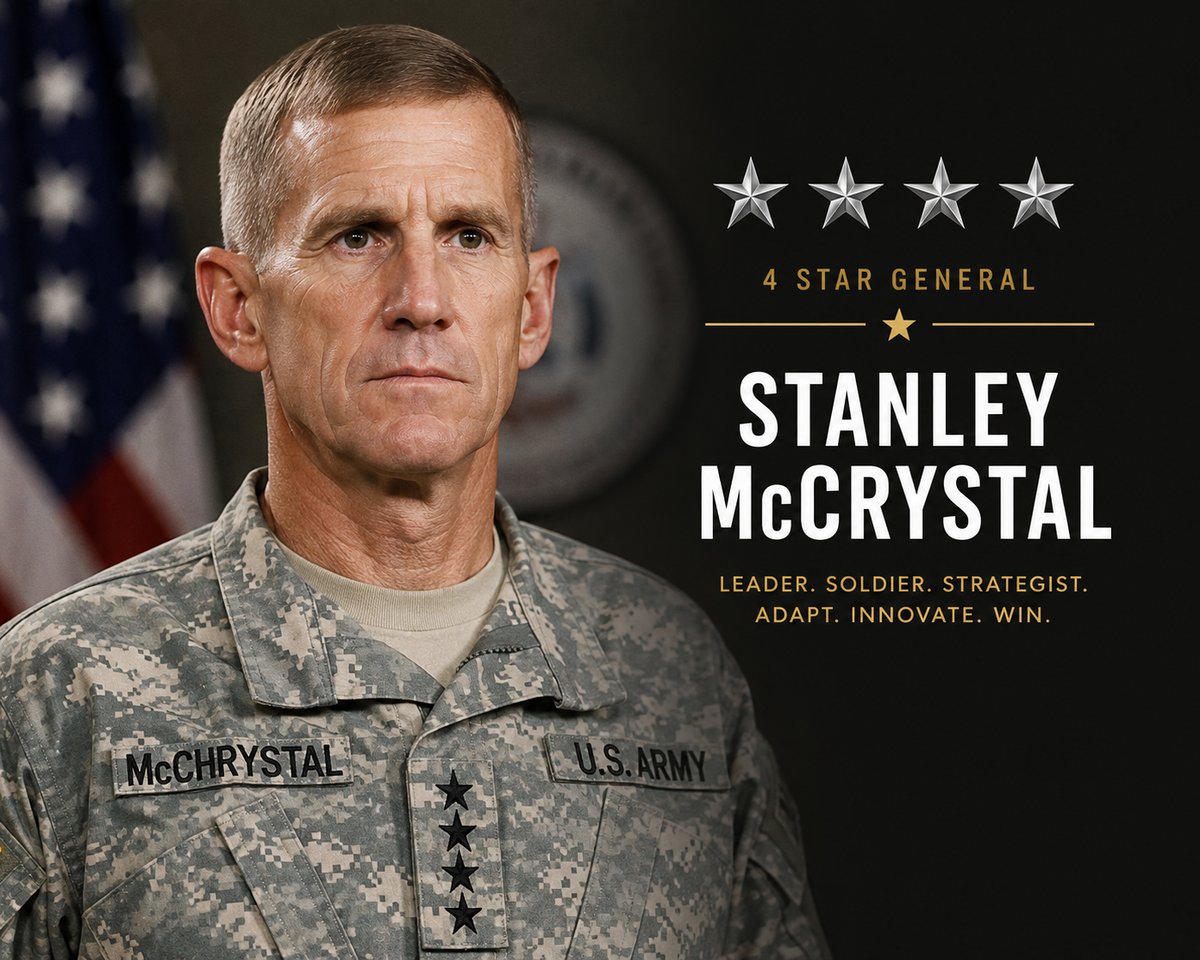
"The temptation to lead as a chess master, controlling each move of the organization, must give way to an approach as a gardener, enabling rather than directing."
- Stanley McChrystal, a retired four-star general who wrote Team of Teams in 2015 after rebuilding Joint Special Operations Command around pushing decisions down to whoever already held the information.