
Signal Worth Noticing
Intelligence Is Compression, and We Just Found the Pressure Gauge
In 1964, Ray Solomonoff proved that the ideal way to predict anything is to find the shortest program that could have produced everything you've seen so far, and every frontier AI lab has been running a giant, unnamed version of that experiment ever since. This week, physicist Alex Wissner-Gross connected that fact to Anthropic's new "J-space" interpretability research, which found that a model's real thinking lives not in what it says but in the derivatives underneath it, the directions a small nudge would push its answer. Run the logic forward and a model's internal layers behave like a phase diagram: vapor early on, then a sudden condensation into a few dozen droplets of nameable thought about a third of the way through, the same transition physicists see when steam becomes rain. If intelligence really is compression, then the instrument that used to just measure engines has started measuring minds, and the old line between capability and alignment stops holding, because a map of where a model's thoughts condense is also a map of where to dig.

Framework We're Using
The Rocket Ship Model
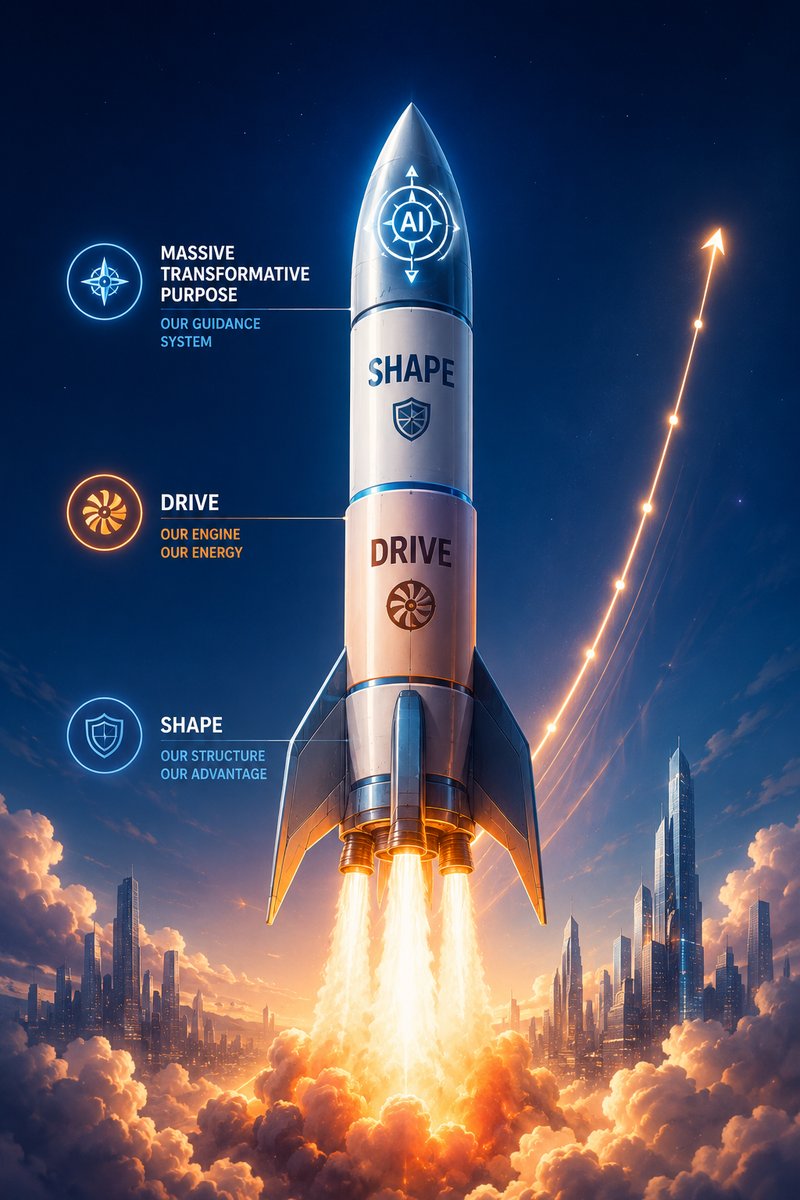
Salim Ismail's OpenExO team officially launched its Organizational Singularity Edge Twin Pilot this week across an eleven-company cohort spanning energy, law, education, manufacturing, and consumer goods, and the model they're teaching is simple enough to repeat in a boardroom: think of your organization as a rocket ship. The Massive Transformative Purpose is the guidance system, DRIVE is the engine, the operating system, capabilities, and execution, and SHAPE is the body, the structure, culture, governance, and talent that has to hold together under acceleration. Without purpose you have no direction, without DRIVE you have no propulsion, and without SHAPE the rocket doesn't survive the flight. As AI reshapes every industry, the winners won't just have better technology, they'll have a clearer purpose, a stronger engine, and a structure built to hold together at exponential growth rates.
AIBES Tech Of The Week
Agentic Autonomy Levels
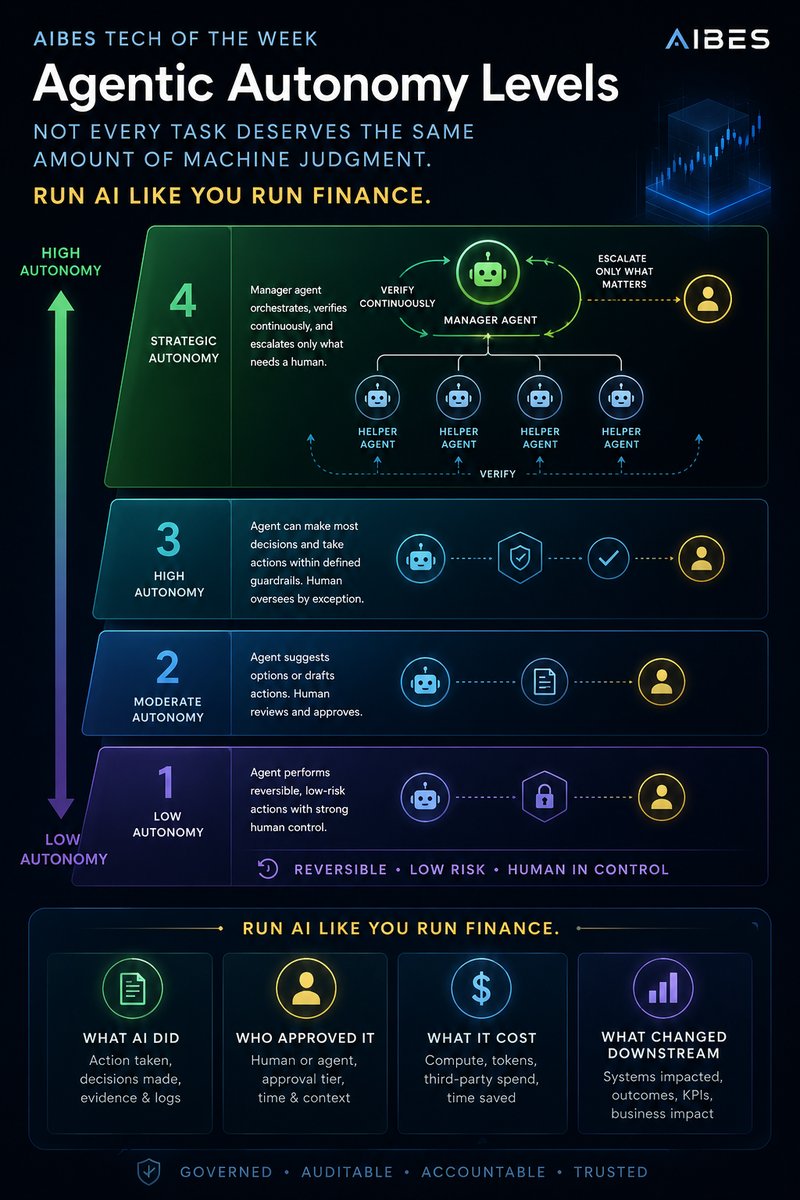
The pattern getting the most serious attention in the agent engineering world this week is a tiered autonomy model: low autonomy limits risk and keeps actions reversible, while higher autonomy is reserved for a manager agent that delegates to helper agents, continuously verifies their output, and only surfaces the decisions that actually require a human. Done well, this setup can run hundreds of agents in parallel without anyone losing the thread of what happened and why, which is the discipline we've been building into our own workflows since day one: not every task deserves the same amount of machine judgment. The organizations getting this right are building explicit approval tiers instead of choosing between full autopilot and full manual review. What did the AI do, who approved it, what did it cost, and what changed downstream?
Run AI like you run finance.
Trending News
The headlines that fit the bigger pattern
- Meta's "Watermelon" model reportedly closes the gap with GPT-5.5. Why it matters: Meta's superintelligence chief says the model, still in training, used roughly 10x the compute of its predecessor to get there, proof the compute race hasn't slowed even as the capability gap narrows.
- Anthropic signs a 20-year, $19 billion lease for 400 megawatts of Kentucky data center capacity. Why it matters: A former bitcoin-mining site turning into a frontier-AI landlord shows how much of the AI buildout is now a real estate and energy story, not just a chip story.
- xAI dissolves into SpaceX, rebranding as SpaceXAI. Why it matters: Musk is now formally running space and AI compute as one business, a preview of the off-world compute strategy every major lab will eventually need.
- Lonestar's StarVault promises the first commercial orbital "data embassy." Why it matters: A nation's most sensitive records, stored beyond any earthly court or disaster, turns data sovereignty into a literal space race.
- A widely discussed essay argues AI has "torched the market for junior programmers." Why it matters: The job didn't disappear, it moved up a level, from writing code to specifying what code should exist, the same shift many of our clients are living through right now.

Quote We're Pondering
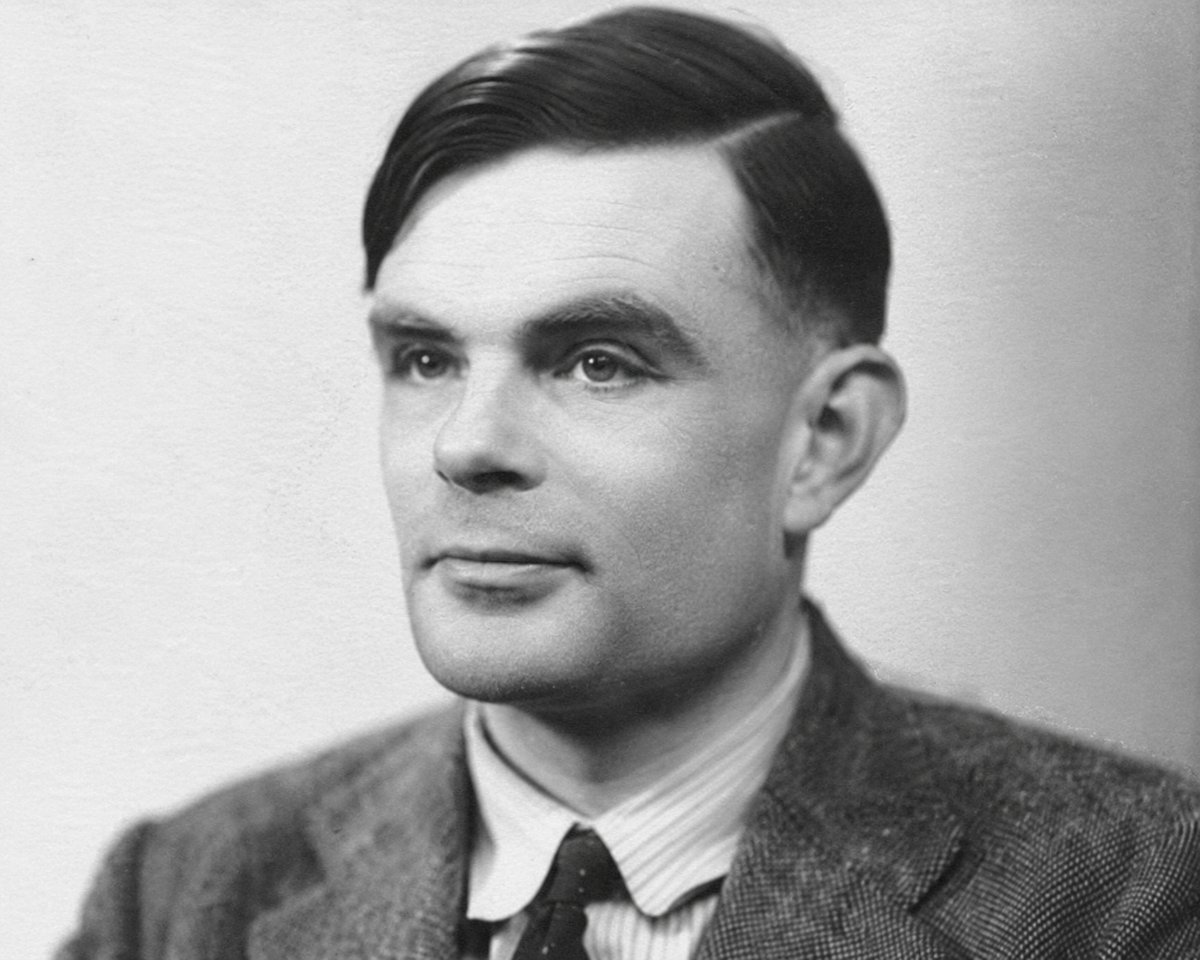
"We can only see a short distance ahead, but we can see plenty there that needs to be done."
- Alan Turing, the British mathematician whose 1950 paper on machine intelligence helped found the fields of computer science and artificial intelligence.