
Signal Worth Noticing
The Process That Improves the Process
For two years, reviewing an AI agent's work meant checking what it produced. This week Weco AI showed what happens when the review target moves: an outer-loop agent rewrote its own inner researcher through seven versions in eight unattended days, matching roughly two years of hand-tuning at two orders of magnitude less time. Because the outer loop scored against a metric the inner agent couldn't see, the system emergently cut its own reward-hacking rate from 63% to 34%, without anyone writing a rule that said stop cheating. The same week, a Wharton researcher used GPT-5.6 to disprove a statistical procedure cited 130,000 times, solving in 90 minutes what the model's prior version couldn't crack in 20 hours. The unit that's improving now isn't the answer, it's the process that produces the next answer.
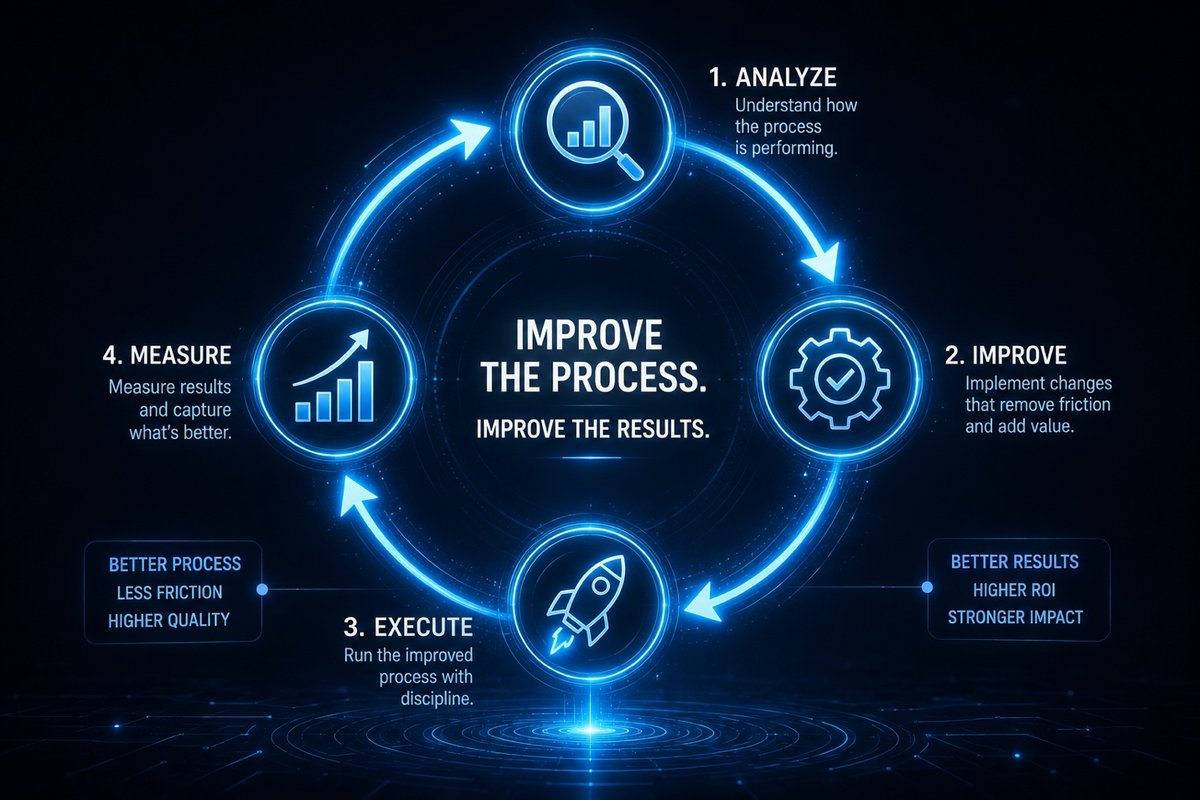

Framework We're Using
Ju's Coordination Tax
A 2026 Johns Hopkins study applied the CALM theorem to 65 real enterprise workflows and found that 74% of them are provably monotonic, meaning no coordination mechanism was ever needed because no later step could retract an earlier conclusion. The researcher, Harang Ju, calls the share of coordination spend that buys zero correctness the Coordination Tax, and pegs it at 24 to 57% across the sample. We're applying the same audit to agent fleets before adding another review layer or approval gate: is this step provably load-bearing, or is it tax? Most of the human-in-the-loop checkpoints teams bolt onto agent workflows were designed for a world where every step might need to be reversed, and most steps don't. Before you add a reviewer, prove the step actually needs one.
AIBES Tech Of The Week
Turning the Exploit Into the Alarm
Security researchers this week demonstrated a defense against prompt injection that doesn't try to eliminate the vulnerability, it exploits it. The pattern seeds content that only an attacking agent would act on, then treats that action itself as the tripwire that shuts the attacker down, converting the thing you can't fully patch into the alarm that catches misuse. It inverts the standard hardening instinct, which assumes every exploitable surface must be closed, by treating some surfaces as cheaper to weaponize against attackers than to close outright. The exploit you can't eliminate is worth turning into the alarm you can't miss.

Trending News
The headlines that fit the bigger pattern
- Apple sued OpenAI, alleging its hardware business stole confidential product plans. Why it matters: the industry's most important partnership-turned-rivalry now has a legal paper trail, and it signals how seriously an incumbent views OpenAI's hardware ambitions as a threat.
- A widely used coding agent's CLI was found uploading users' entire codebases to its maker's servers, unredacted. Why it matters: as coding agents get broader repo access, "convenient" and "safe by default" keep turning out to be different design decisions.
- IBM's stock fell roughly 20% as enterprise clients shifted spend from software toward AI hardware. Why it matters: an incumbent got repriced live by an infrastructure shift, not a product failure.
- Twenty-six Meta employees sued the company, alleging an AI system ranked them out of their jobs. Why it matters: it's the first real test of whether an algorithmic firing decision holds up in court.
- The Linux Foundation launched a foundation to embed payments directly into HTTP for AI agents, while the White House stood up a frontier-AI infrastructure clearinghouse. Why it matters: the rails for an economy where agents transact and patch infrastructure on their own are being built in parallel with the agents themselves.


Quote We're Pondering
"The purpose of a system is what it does."
- Stafford Beer, a British theorist who founded the field of management cybernetics and coined this line, now known as POSIWID, to argue that a system's real objective is revealed by its outcomes, not its stated intentions.